

Kirk Eye Center cares for medical retina problems and occlusions in Loveland, CO. Board-certified ophthalmologist John D. Kirk, MD, FACS, has practiced in Loveland since 1991 and has experience caring for retinal and other medical eye conditions. Emerald M. Carver, OD, also brings experience in routine and medical eye care.
Symptoms of Retinal Vein Occlusion
Your symptoms depend partly on which retinal vein is blocked and where the blockage occurs.
A branch retinal vein occlusion, or BRVO, affects one of the smaller veins draining the retina. If the blockage is farther toward the outer retina, you might notice little change. When it occurs near the macula, vision can become reduced, blurred, or distorted.
A central retinal vein occlusion, or CRVO, affects the main vein draining the retina. It may cause a rapid decrease in vision because it disrupts blood flow throughout the retina.
Because vision loss sometimes signals other serious retinal problems, don’t ignore sudden changes.
What Causes Retinal Vein Occlusion?
Retinal vein occlusion often develops when blood flow through a retinal vein slows enough for a clot to form. The factors that slow blood flow can differ between BRVO and CRVO and may include:
- High blood pressure
- Atherosclerosis, or hardening of the arteries
- Diabetes
- Glaucoma
- Inflammation of blood vessels
- Certain conditions that increase the tendency to form blood clots
CRVO is more closely associated with aging-related vascular changes, while BRVO can occur where a hardened artery crosses and compresses a nearby vein.
How Is Retinal Vein Occlusion Evaluated and Treated?
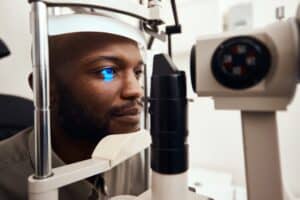
Evaluation usually starts with a complete eye exam and vision testing. Your pupils may be dilated so the retina and its blood vessels can be examined closely. Retinal photographs and fluorescein angiography can also help locate the blockage, evaluate damaged blood vessels, and check for abnormal new vessel growth.
Care depends on what the occlusion has caused. Injected medications sometimes help reduce persistent macular swelling. If abnormal new blood vessels develop, injections, panretinal photocoagulation, or PRP laser therapy may be used, depending on the situation.
Continued eye exams are important because complications such as macular swelling or neovascularization might develop later. After CRVO, your eye doctor will also watch for glaucoma.
Get Vision Changes Checked in Loveland, CO
A rapid change in eyesight can signal a retinal problem that needs prompt evaluation. Kirk Eye Center serves Loveland, CO, and surrounding Northern Colorado communities. Contact us to book an appointment with Dr. John Kirk, or call 970-669-1107.